8 Min. Lesezeit
Post-Purchase-Flow: So gewinnst du die zweite Bestellung
The second order is the most profitable one, and almost no shop has a flow that asks for it. Here is the sequence I build.
Author Name
Lorem Ipsum is simply dummy text of the printing and typesetting industry.
Die erste Bestellung ist, wo du Geld ausgibst. Die zweite ist, wo du anfängst, welches zu verdienen.
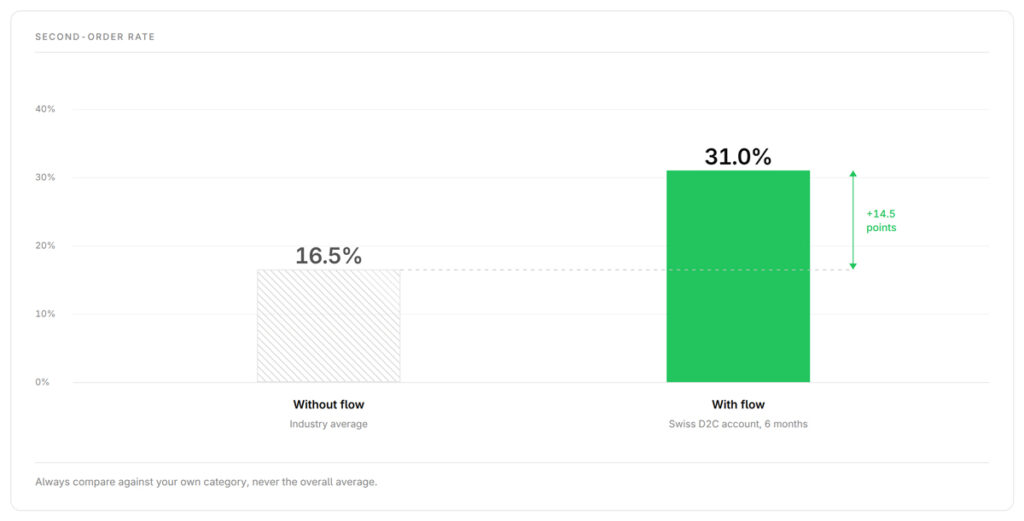
Die Akquisitionskosten sind schon bezahlt, und das Vertrauen ist da, weil das erste Paket ankam und hielt, was es versprach. Der Vorteil wächst mit jeder weiteren Bestellung. Die Daten von Bluecore zeigen, dass ein Käufer nach einem Kauf mit 15,07% Wahrscheinlichkeit wieder kauft, nach zwei mit 25,59% und nach sechs mit 50,47% [3].
📊 Kurzer Fakt Bluecore beziffert die durchschnittliche Wiederkaufsrate auf 16,5% [1]. Eine separate Studie von 2026 mit 156’110 Kunden kommt auf 18,8% [2]. Rund fünf von sechs Leuten, für deren Akquise du bezahlt hast, kommen also nie zurück, und die meisten wurden nie darum gebeten.
Diese Lücke füllt auch sonst niemand. Omnisend hat gemessen, dass Warenkorbabbruch- und Willkommensmails allein 76% aller durch Automationen erzeugten Bestellungen antreiben [6], und beide laufen vor dem Kauf. Das Fenster nach dem Kauf ist der Rest, und genau deshalb ist es in den meisten Konten die günstigste Stelle, an der noch Umsatz liegt.
Ein Shop sagt mir, die Post-Purchase-Mail sei abgedeckt, und gemeint sind die Bestellbestätigung und die Versandmeldung.
Das sind Transaktionsmails, und ich habe sie früher als Quittungen abgetan. Die Daten haben mich davon abgebracht. Versandbestätigungen werden zu 62,67% geöffnet und konvertieren zu 2,19%, was $3.08 pro versendeter Mail entspricht, gegenüber einer Conversion Rate von 0,08% bei normalen Kampagnen [5]. Deine Quittungen sind die meistgelesenen Mails, die dein Shop je verschickt.
Also bau sie richtig. Der Tracking-Link gehört nach oben, über die Bestellübersicht, weil das Tracking der Grund ist, warum die Mail geöffnet wurde. Darunter eine Zeile, was als Nächstes passiert und wann. Darunter ein Link auf deine Anleitung oder dein Setup-Video, der günstigste Retouren-Verhinderer, den du besitzt. Was in eine Quittung nicht gehört, sind ein Rabattcode, eine Produktempfehlung oder ein Cross-Selling-Block. Zum einen, weil sie den Tracking-Link nach unten drücken. Zum anderen wegen dem, was sie rechtlich aus der Mail machen.
Eine Quittung wird dadurch trotzdem kein Flow. Eine Quittung beantwortet eine Frage, die der Kunde ohnehin hat. Ein Post-Purchase-Flow ist eine Sequenz von Marketingmails, die auf die nächste Bestellung hinarbeitet, und die Grenze dazwischen ist eine Einwilligungsgrenze. Transaktions- und Marketing-Einwilligung sind nicht dieselbe Erlaubnis. Eine Quittung darf an jeden gehen, der bestellt hat. Alles, was verkauft, nach einer Bewertung fragt oder erkundigt, wie es läuft, ist Werbung, und in Deutschland ändert das Anhängen an eine Quittung daran nichts [8] [11].
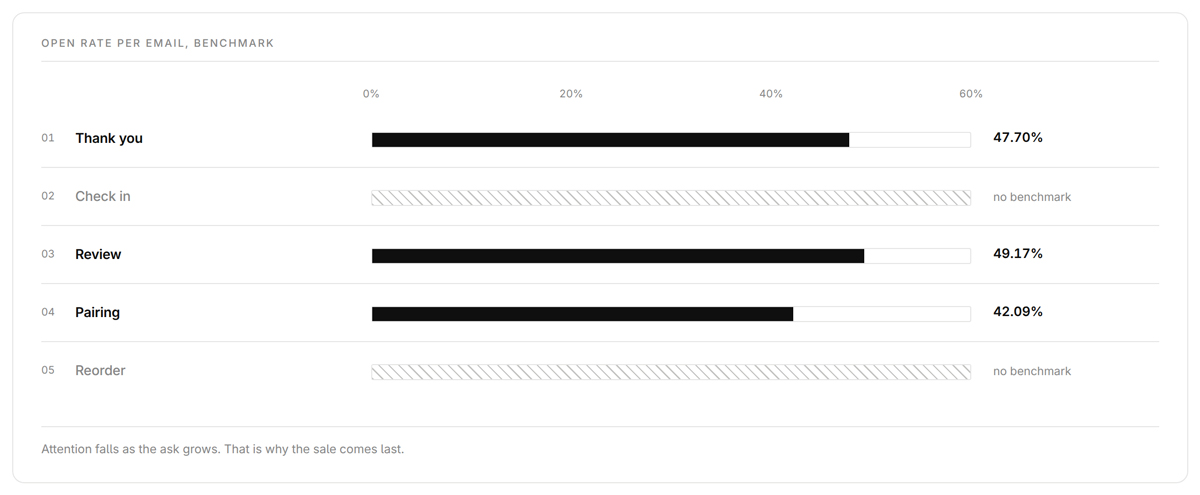
Fünf Mails, jede mit einer Aufgabe. Ich passe die Anzahl und die Texte pro Shop an, aber das Rückgrat bleibt gleich. Die Benchmarks daneben stammen aus einem Datensatz und einem Zeitraum, sie sind also sauber vergleichbar [5], und dieser Datensatz kennt keine eigene Zeile für eine Nachfrage- oder Nachbestell-Mail, deshalb tragen die Mails 2 und 5 keine und werden stattdessen an deiner eigenen Basislinie gemessen.
Halt das Verkaufen aus den ersten drei Mails raus. Für diese Reihenfolge gibt es einen messbaren Grund. Die Abmelderate liegt bei 0,30% auf der Versandbestätigung gegenüber 0,89% auf der Cross-Selling-Mail [5], dem höchsten Wert aller Automationstypen in diesem Datensatz, während die Ergänzungsmail von allen Post-Purchase-Mails am wenigsten einbringt. Die Bitte kostet dich Listengesundheit. Gib sie einmal aus, und gib sie spät aus.
Eine Empfehlungs- oder Treueprogramm-Einladung reist in Mail 3 oder 4 mit, statt sich einen sechsten Schritt zu verdienen, weil sie eine weitere Bitte in einem Fenster ist, in dem jede Bitte in Abmeldungen bezahlt wird.
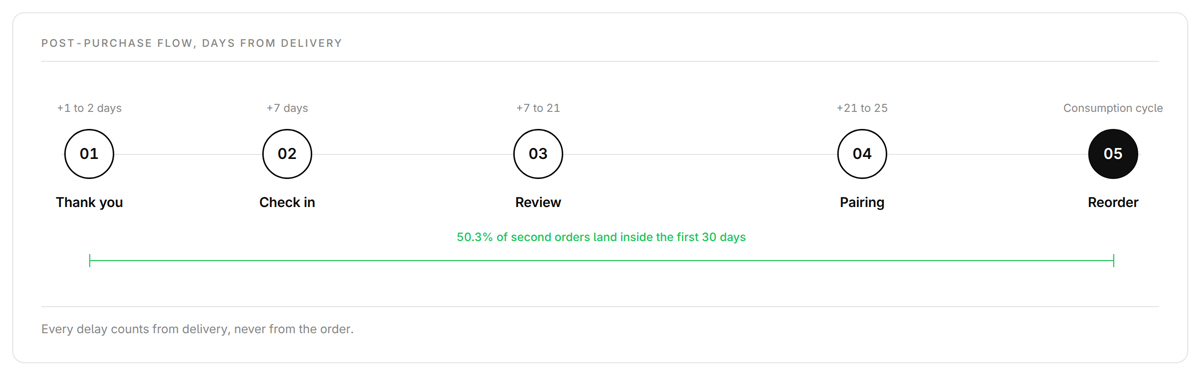
Die Sequenz ist eine Form, kein Zeitplan. Der Zeitplan kommt daher, wie schnell deine Kunden zurückkommen und wie schnell deine Pakete ankommen.
Über 40’397 Wiederkäufer hinweg passieren 6,3% der Zweitbestellungen am selben Tag wie die erste, 15,9% innerhalb einer Woche, 50,3% innerhalb von 30 Tagen und 76,4% innerhalb von 90 [2]. Die Hälfte der Chance ist an Tag 30 vorbei, die Sequenz sollte bei den meisten Shops also innerhalb des ersten Monats fertig sein. Durchschnitte führen dich hier in die Irre, weil ein kleiner Rest der Käufer erst nach 12 oder 18 Monaten zurückkommt. Nimm den Median.
| | |
|---|
| | |
| | |
| +7, +14 oder +21 je nach Kategorie | |
| | |
| Verbrauchszyklus, oder +45 bei Gebrauchsgütern | |
Das sind Startwerte, die du durch den Median-Tag der zweiten Bestellung in deinem eigenen Shop ersetzt.
✋ Meine ehrliche Meinung Bei Lauvette haben wir die Nachbestell-Verzögerung aus der Packungsgrösse abgeleitet, was logisch wirkte und etwa ein Jahr lang falsch war. Als wir aufgezeichnet haben, wann die zweiten Bestellungen tatsächlich eintrafen statt wann das Produkt hätte leer sein sollen, lag der Peak Wochen vor unserer Mail. Leute bestellen nach, wenn sie daran denken, nicht wenn das Glas leer ist.
Der zweite Eingabewert ist die Zustellung. Eine feste Verzögerung ab dem Bestellereignis geht daneben, sobald der Versand langsam ist, und eine Danke-Mail, die vor dem Paket landet, ist schlechter als gar keine Mail. A-Post kommt schneller an als B-Post, und alles, was die Grenze überquert, bringt eine Verzollung mit, die du nicht vorhersagen kannst. Löse Mail 1 entweder über einen Zustell-Webhook aus, oder setze die erste Verzögerung so, dass sie dein 90. Perzentil der Lieferzeit abdeckt statt deinen Durchschnitt.
Ob die fünfte Mail eine Nachbestellung ist oder etwas anderes, hängt davon ab, was du verkaufst, und das ist die grösste Verzweigung im Flow.
| | | |
|---|
| Kaffee, Supplements, Pflege, Tierfutter | Möbel, Elektronik, Schmuck, Mode |
| | 7% bis 18% (Mode 12% bis 17%) |
Die zweite Bestellung ist | In 77% der Fälle dasselbe Produkt über alle Branchen hinweg, bei Supplements 82% bis 93% [2] | |
| Nachbestellung am Ausgeh-Punkt | Eine andere Kategorie oder ein passendes Teil |
| | Saison, Anlass, Browse-Verhalten |
Wenn du Verbrauchsgüter verkaufst und keine Nachbestell-Mail hast, wäre das das Erste, was ich baue, vor dem Welcome-Flow, vor allem anderen. Wenn du Gebrauchsgüter verkaufst, bau zuerst die Ergänzungs- und die Bewertungsmail und behandle die fünfte als saisonalen Anstoss.
Dann endet der Flow, und genau das lassen die meisten Versionen davon weg. Eine Post-Purchase-Sequenz ohne Ausgang ist ein Newsletter mit Zwischenschritten. Nach der Nachbestell-Mail verlässt der Kontakt den Flow und wandert in deine Win-back-Sequenz oder auf deine normale Kampagnenliste. 90 Tage sind der sinnvolle Schnitt, weil bis dahin 76,4% der Zweitbestellungen bereits eingetroffen sind [2]. Ein rechtlicher Punkt zu dieser Übergabe, auf den ich weiter unten zurückkomme. Die deutsche Bestandskunden-Ausnahme nach §7 Abs. 3 UWG stützt sich auf den Verkauf, auf den du dich beziehst, und sie wird schwächer, je weiter du dich davon entfernst. Eine Win-back-Mail an einen deutschen Käufer, der dir nie ein Marketing-Opt-in gegeben hat, ist eine andere Frage als Mail 1, nicht dieselbe Erlaubnis nur dünner gezogen.
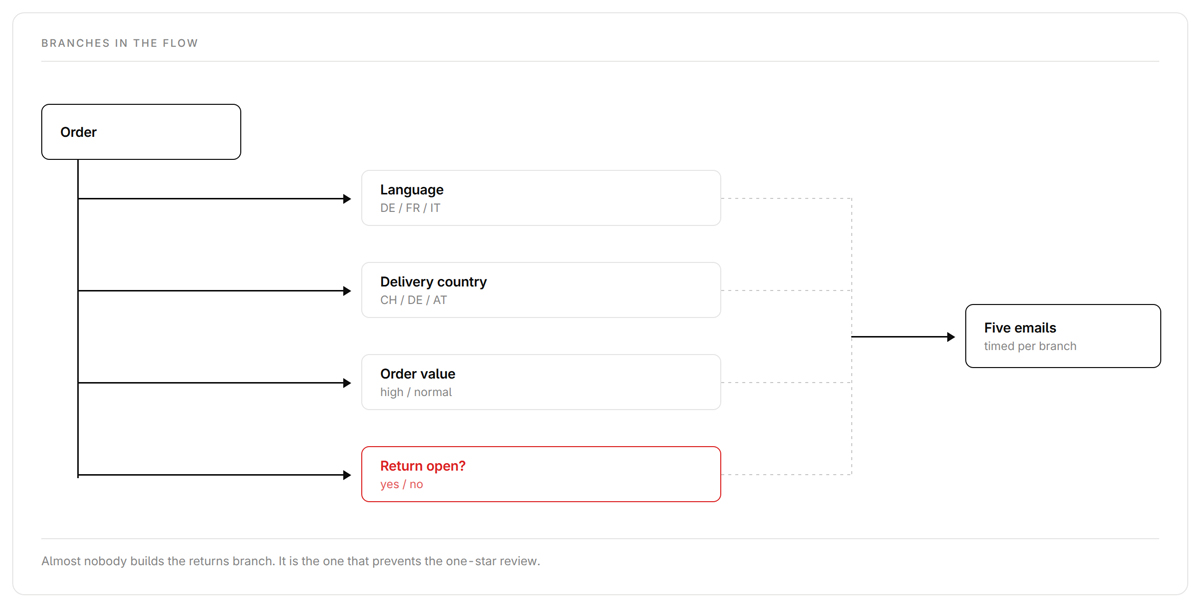
Eine lineare Sequenz an alle ist der Fehler, für dessen Behebung dieser Flow existiert. Ein Stammkunde sollte nicht dieselbe Danke-Mail bekommen wie ein Erstkäufer, und eine Bestellung über CHF 900 verdient kein Follow-up wie eine über CHF 60. Fünf Verzweigungen sind ihre Bauzeit wert.
Es gibt eine sechste Verzweigung, die fast niemand baut. Schliess vor den Mails 3 und 4 alle aus, die ein offenes Support-Ticket, eine angemeldete Retoure oder eine Rückerstattung haben. Wer jemanden bittet, ein Produkt öffentlich zu bewerten, das er gerade zurück in den Karton packt, macht aus einer privaten Beschwerde eine Ein-Stern-Bewertung. Setz ein Kontaktattribut aus deinem Support-Tool und prüf es mit einer bedingten Verzweigung. Ich habe das bei einem Schweizer Shop gelernt, bei dem eine Charge Tage zu spät aus dem Lager ging und die Bewertungsanfrage trotzdem planmässig raus war. Fünf Ein-Stern-Bewertungen in einer Woche, jede über den Versand, keine über das Produkt.
Ist eine Bewertungsanfrage nach dem Kauf in Deutschland legal? Nicht ohne Einwilligung, und genau dort läuft ein Schweizer Shop auf, der über die Grenze liefert. Alle drei Länder haben eine Bestandskunden-Ausnahme, in der Schweiz und in Deutschland im Lauterkeitsrecht (beide heissen UWG) und in Österreich im Telekomrecht (TKG), und keine davon meint damit dasselbe.
| | 🇨🇭 Schweiz | 🇩🇪 Deutschland | 🇦🇹 Österreich |
|---|
| UWG Art. 3 Abs. 1 lit. o [7] | | |
| 3 | 4 | 5 |
| | ✅ Pflicht, und bei jedem Versand | ✅ Pflicht, und bei jedem Versand |
Bewertungsanfrage ohne Einwilligung | Im Normalfall unproblematisch | 🔴 Als rechtswidrig beurteilt [8] [9] | Wie Deutschland behandeln |
| | Der Hinweis bei der Erhebung | RTR ECG-Liste prüfen (Opt-out-Register) |
| Strafbar, auf Antrag [19] | | Bussen bis EUR 50’000 [13] |
Auf dem Papier trägt die Schweiz die härtere Sanktion, weil Art. 23 UWG daraus ein Antragsdelikt macht [19]. In der Praxis ist Deutschland das Land, das dich erreicht, weil die Abmahnung (ein kostenpflichtiges Unterlassungsschreiben) dort Routine ist und die Schweiz kein vergleichbares System kennt.
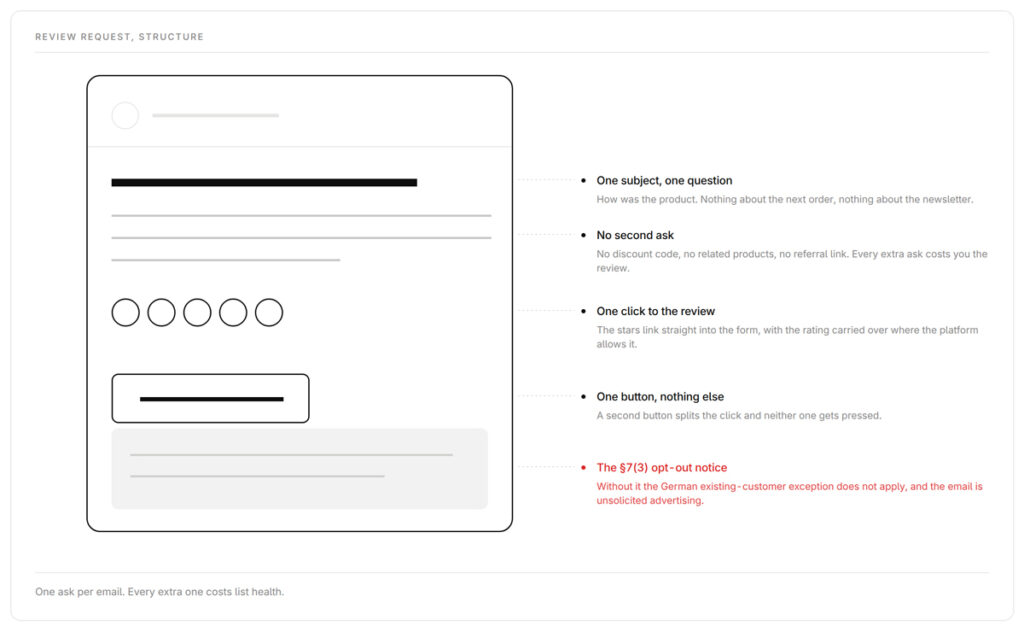
🇩🇪 Deutsche Regel §7 Abs. 3 UWG erlaubt dir, einem Kunden ohne Einwilligung zu schreiben, nur wenn alle vier Bedingungen gleichzeitig erfüllt sind. Du hast die Adresse im Zusammenhang mit einem Verkauf erhalten, du bewirbst eigene ähnliche Waren, der Kunde hat nicht widersprochen, und der Kunde wurde sowohl bei der Erhebung der Adresse als auch bei jeder Verwendung darauf hingewiesen, dass er jederzeit widersprechen kann [10]. An der vierten scheitern die Shops, weil der Widerspruchshinweis im Footer der Mail sitzt und im Checkout-Formular nie aufgetaucht ist.
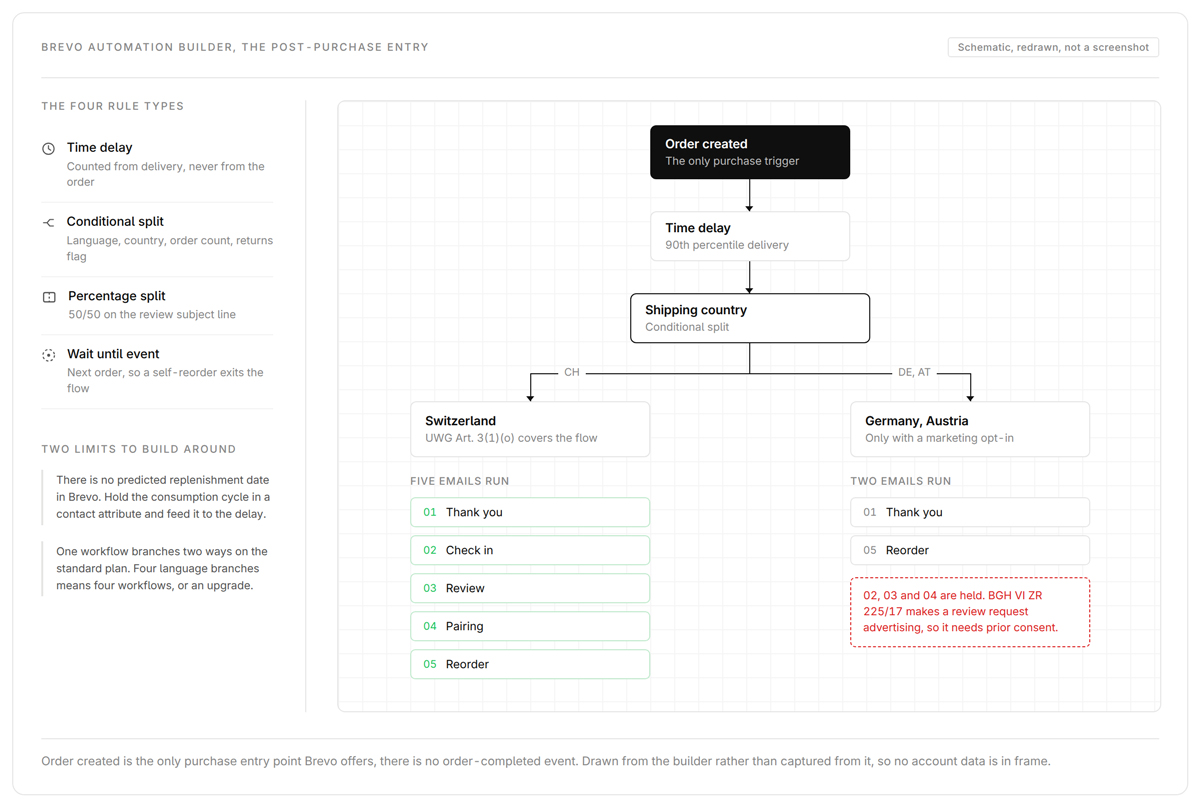
Jetzt zum Urteil, das die Sequenz verändert. Im Urteil BGH VI ZR 225/17 vom 10. Juli 2018 hat der Bundesgerichtshof entschieden, dass eine per E-Mail versandte Kundenzufriedenheitsbefragung Direktwerbung ist und eine vorherige Einwilligung braucht, und dass das Anhängen an eine Rechnungsmail sie nicht davon befreit [8]. Das Kammergericht Berlin war ein Jahr zuvor bei einer einzelnen Bewertungsanfrage zum selben Ergebnis gekommen [9], und eine BGH-Entscheidung von 2015 hielt fest, dass werblicher Inhalt in einer ansonsten transaktionalen Mail die ganze Mail zu Werbung macht [11]. Zusammengelesen sind die Mails 2, 3 und 4 in Deutschland ohne Einwilligung alle schwer zu verteidigen.
🇨🇭 Schweizer Regel Art. 3 Abs. 1 lit. o UWG wird meist zusammengefasst als «du darfst deinen eigenen Kunden schreiben», und er verlangt mehr als das. Die Ausnahme hält nur, wenn die Adresse aus einem tatsächlichen Verkauf stammt, der Absender korrekt genannt ist und du im Moment der Adresserhebung auf die einfache, kostenlose Ablehnungsmöglichkeit hingewiesen hast [7]. Eine Zeile tief in deinen AGB zählt nicht.
Die Ergänzungsmail ist in beiden Ländern die Schwachstelle der Ausnahme, weil der Wortlaut eigene *ähnliche* Waren abdeckt und ein Ergänzungsprodukt per Definition ein anderes ist. Bohnen nach einer Mühle sind vertretbar. Eine andere Kategorie ist es nicht, und das ist das Argument für ein echtes Marketing-Opt-in in deinem Checkout.
Zwei Dinge noch. Das revidierte Schweizer DSG (das Schweizer Datenschutzgesetz) erlaubt eine Bearbeitung nur für einen Zweck, der bei der Erhebung erkennbar war [12], wenn deine Datenschutzerklärung also die Bestellabwicklung nennt und sonst nichts, ergänz eine Zeile zum Marketing. Und das Schweizer Recht kennt kein allgemeines Widerrufsrecht für Online-Bestellungen, die EU gibt 14 Tage [14], ein Flow, der nach Deutschland liefert, sollte die Bewertungsanfrage also bis zum Ende dieser Frist zurückhalten.
Fast jede Version dieses Aufbaus, die du online findest, ist für Klaviyo oder Shopify geschrieben. Wir sind Brevo-first, hier ist also die Form in Brevo [16].
Der Einstiegspunkt ist der Trigger **Bestellung erstellt**, der den Brevo-Tracker im Shop voraussetzt. Einen separaten Trigger für abgeschlossene Bestellungen oder gekaufte Produkte gibt es nicht. Ab da hast du vier Regeltypen. Zeitverzögerung, bedingte Verzweigung, prozentuale Verzweigung und Warten auf ein Ereignis. Die Aufbaureihenfolge unten nutzt alle vier.
Eine Einschränkung, die du einplanen solltest. Brevo hat kein natives Feld für ein vorhergesagtes Nachbestelldatum, du baust es also von Hand, mit einem Kontaktattribut, das den Verbrauchszyklus für die Produktkategorie hält und eine Zeitverzögerung speist.
Welches E-Mail-Tool du auch nutzt, speicher vier Felder auf jedem Kontakt. Quelle der Einwilligung, Zeitstempel, Methode (Single Opt-in, Double Opt-in oder Kauf) und ob der Widerspruchshinweis im Moment der Adresserhebung gezeigt wurde. Das letzte ist das Feld, das niemand speichert, und das eines Tages einen deutschen Fall entscheidet.
Der Flow existiert, um eine Zahl zu bewegen, den Anteil der Erstkäufer, die eine zweite Bestellung aufgeben. Vergleich sie mit deiner eigenen Kategorie statt mit dem Gesamtdurchschnitt von 16,5% bis 18,8% [1] [2].
Fünf weitere Zahlen zeigen dir, wo es leckt.
Es gibt keinen Schweizer oder DACH-Benchmark für Post-Purchase, Handelsverband.swiss veröffentlicht Marktgrössen und keine Flow-Zahlen [18], bau dir also zuerst deine eigene Basislinie.
⚠️ Achtung Beobachte die Beschwerderate bei den Mails 4 und 5. Dieser Flow ist meist die einzige Stelle, an der ein Shop Leute bewirbt, die nie ein Newsletter-Häkchen gesetzt haben. Die Grenze von Gmail liegt bei einer Spam-Beschwerderate von 0,3%, und wer sie dauerhaft reisst, zahlt mit der Zustellbarkeit aller Sendungen, nicht nur dieses Flows [17]. Schalt ihn nur für neue Bestellungen ein, und lass ihn am Starttag nicht rückwirkend über deine historischen Käufer laufen.
Versandbestätigungen sind kein Post-Purchase-Flow, und die zweite Bestellung fragt nicht von selbst nach sich. Genau das machen wir bei sakto. Wir bauen die Sequenz in Brevo, timen die Nachbestell-Mail auf den echten Zyklus deines Produkts, verzweigen sie nach Land, damit deine deutschen Kunden eine Version bekommen, die hält, und geben dir die Zahl vorher und nachher.
sakto ist eine Schweizer E-Mail-Marketing-Agentur, Brevo-first, gebaut für E-Commerce- und B2B-Versender, die wollen, dass ihre E-Mail funktioniert und auf der richtigen Seite des Schweizer und deutschen Rechts bleibt.
[1] Bluecore Customer Growth Benchmarks Report (16. April 2024) · [2] BS&Co (E-Mail-Marketing-Agentur, bsandco.us), Repeat Purchase Rate Benchmarks, 156’110 Kunden über mehr als 10 Branchen, 365-Tage-Betrachtung (14. Februar 2026), bsandco.us/blog-post/repeat-purchase-rate-benchmarks · [3] Bluecore Retail Ecommerce Benchmark Report (2022) · [4] Klaviyo 2025 Benchmark Report, AMER-Ausgabe · [5] Omnisend E-Mail-Marketing-Benchmarks, Daten 2025 (13. Mai 2026) · [6] Omnisend 2026 Ecommerce Marketing Report · [7] Schweizer UWG Art. 3 Abs. 1 lit. o, Fedlex SR 241, mit Erläuterungen des BAKOM · [8] BGH VI ZR 225/17 (10. Juli 2018) · [9] KG Berlin 5 W 15/17 (7. Februar 2017) · [10] §7 Abs. 3 UWG (dejure.org) und IT-Recht Kanzlei · [11] BGH VI ZR 134/15 (15. Dezember 2015) · [12] Revidiertes Schweizer DSG Art. 6 (1. September 2023) · [13] §174 TKG 2021 und die RTR ECG-Liste (WKO) · [14] Art. 40a ff. OR, EU-Verbraucherrechterichtlinie · [15] PowerReviews, Untersuchung zum Timing von Bewertungsanfragen · [16] Brevo Help Center, Trigger, Aktionen und Regeln · [17] Google Email Sender Guidelines · [18] Handelsverband.swiss mit NIQ/GfK und der Post (12. März 2026) · [19] Art. 23 UWG, steigerlegal.ch (16. Juli 2019)
*Dieser Artikel ist allgemeine Information, keine Rechtsberatung. Schweizer, deutsches und österreichisches Marketingrecht ist einzelfallabhängig. Kläre es mit einer qualifizierten Fachperson, bevor du handelst.*